
Supplies are one of the few large costs a dental practice controls week by week. Rent and salaries are set months in advance, but every order is a decision. The trouble is that few practices measure supply spending in a way that tells them whether it's under control.
How to measure supply costs
The most common measure is supply spending as a share of collections:
Supply cost % = (total spent on dental supplies ÷ total collections) × 100
Use the same period for both numbers, ideally a full quarter or year so one large order doesn't skew the result. Keep lab fees separate: they're a different cost with their own benchmark.
What's a typical number?
A commonly cited target for general practices is roughly 5–7% of collections for dental supplies, with higher numbers a sign that spending deserves a closer look (Bulletproof Dental Practice, Method). Treat this as a rough guide rather than a rule. Specialty practices such as oral surgery, implant-focused and orthodontic offices naturally spend more because of the materials they use. The most useful comparison is your own practice over time, quarter by quarter.
Where supply money is lost
High supply costs usually aren't caused by paying a little too much per box. They come from inventory problems:
- Expired products: supplies that sit at the back of a shelf until they can no longer be used.
- Overstock: cash tied up in months of supplies "just in case", often because nobody trusts the counts.
- Duplicate orders: two people notice the same empty shelf and both order.
- Rush orders: paying for fast shipping, or buying at a higher price, because an item ran out.
- Dormant products: items bought for one case or one provider that are never used again.
- Brand creep: several brands of the same product on the shelf, so none is bought in volume.
How to bring supply costs down
Each of these leaks has a fix, and each fix depends on accurate, current inventory data:
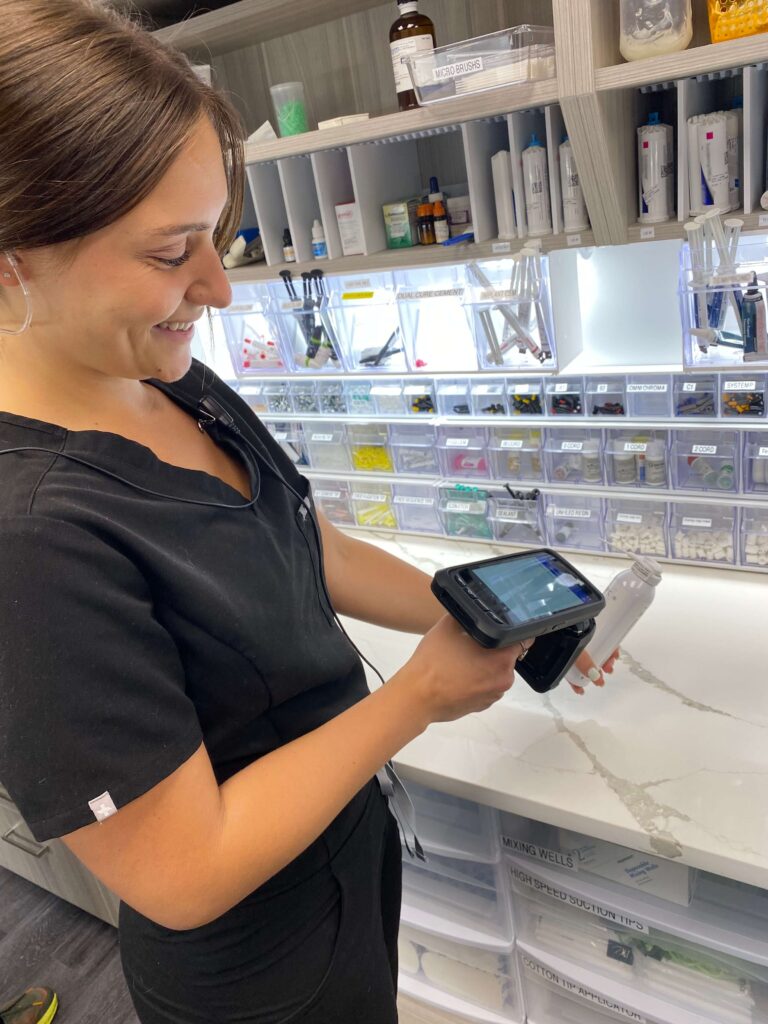
- Know what you have. Every saving starts with an accurate count. DTrackAll counts the whole office in minutes with an RFID handheld, so you can count as often as you need instead of once a month.
- Order to set levels, not by feel. Ordering to a par level stops both stockouts and overbuying. DTrackAll compares every count with the levels you set for each item and location and alerts you the moment stock drops below them. See how par levels work.
- Stop products expiring on the shelf. DTrackAll tracks expirations by lot and flags products before they expire, so they're used first.
- End duplicate orders. DTrackAll builds one reorder list after each count, grouped by supplier, approved in one click, so two people never order the same thing.
- Use substitutes instead of rush orders. Link approved alternates to each product and DTrackAll counts them toward your stock and suggests them when an item is backordered.
- Cut overstock and dormant products. DTrackAll's reports show usage trends, overstock, dormant products and spend, so you can stop reordering what nobody uses.
- Negotiate from real usage. DTrackAll tracks usage by product and brand, so you know your highest-spend items before you talk to suppliers.
Measure, then manage
Measuring supply costs once a year tells you whether there's a problem. Managing them takes current, accurate inventory data, and that's where most practices struggle, because counting by hand takes hours. DTrackAll makes the data a by-product of a count that takes minutes. For groups and DSOs, it shows every location in one place, so you can compare offices and move stock instead of buying more.
For the bigger picture, read Dental Inventory Management: The Complete Guide, covering why manual methods break down, how methods compare, DSOs and what to measure.
See where your supply money goes. Book a demo and we'll show you how DTrackAll reports on your own supplies.